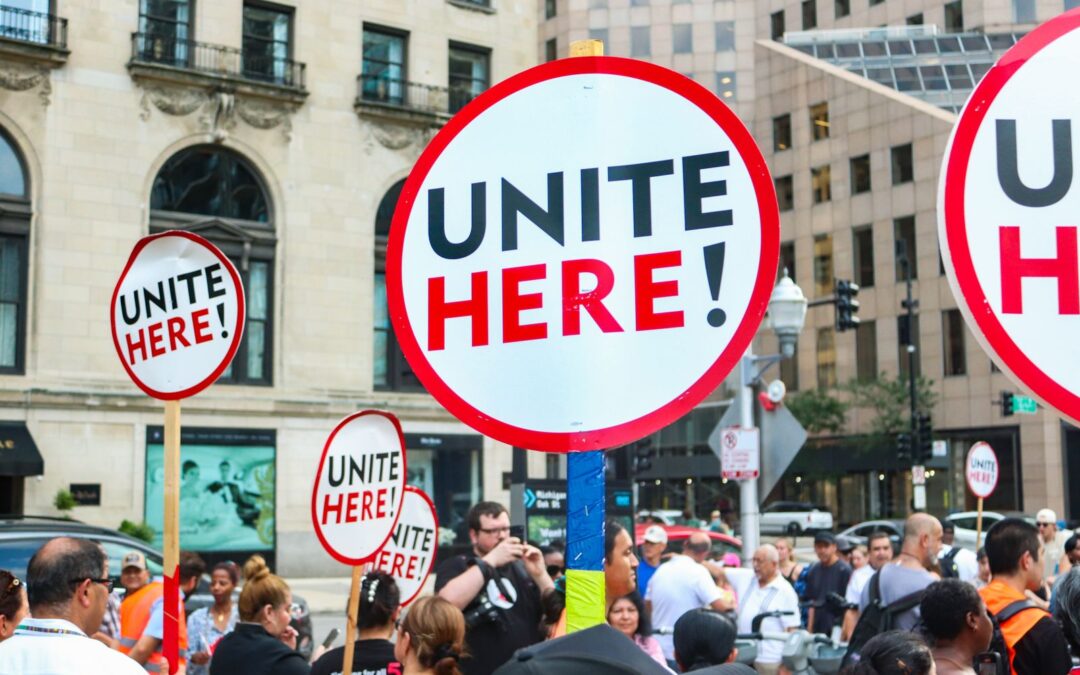
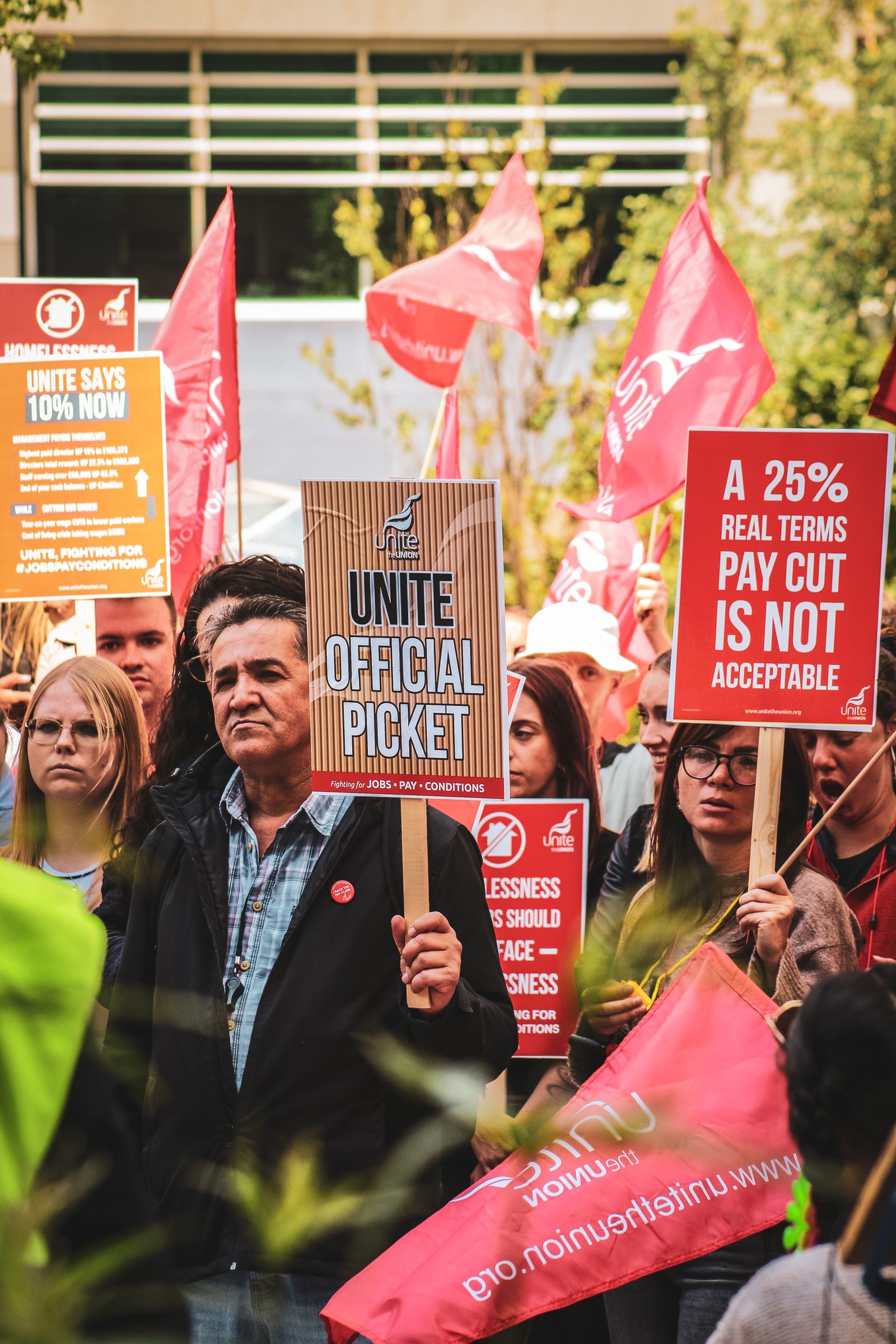
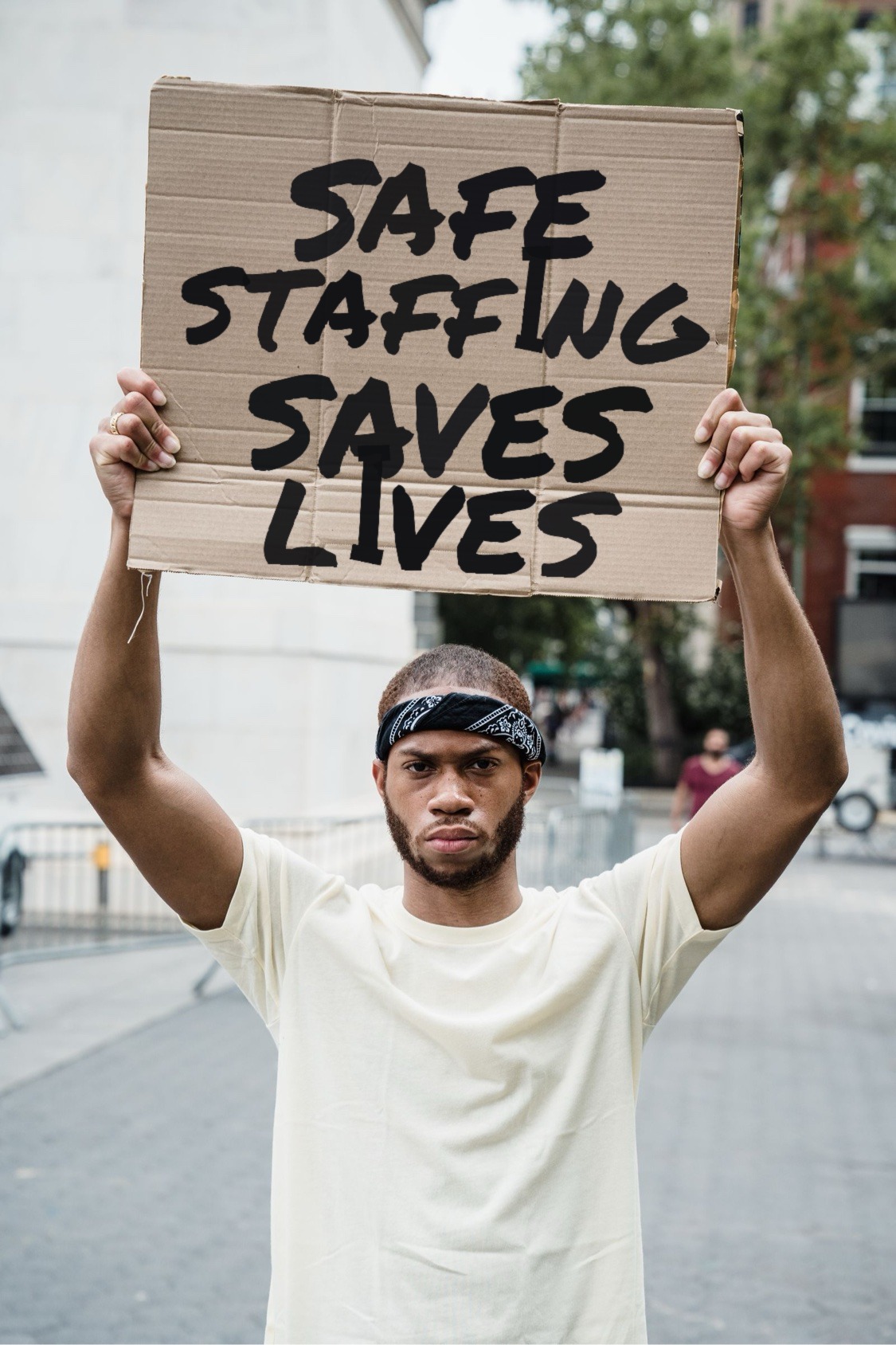
The clip is thirty seconds long and you have watched it four times. Nurses in scrubs, signs in their hands, and underneath it a comment section full of strangers asking where their compassion went. You close the app, clock back in, and take the assignment you already know is unsafe.
Something in that comment section lands harder than it should, and you know why. You have thought about the line yourself — not seriously, not out loud, but in the parking lot after a shift where you charted three hours late and never sat down. Then the guilt arrives right on schedule, wearing the same words the hospital uses: real nurses don’t walk out. That guilt is not accidental. It is manufactured, it is budgeted for, and it works.
Nurses strike over unsafe staffing first and pay second — after the staffing committees, feedback boxes, and incident reports have already failed. The guilt that calls it greed is manufactured, and federal law is on the strikers’ side: a lawful, noticed strike is protected activity, not patient abandonment. Whether your job waits for you afterward depends on which kind of strike it is.
What follows is not an argument for walking out, and it is not an argument against it. Stronger Nurse does not pitch its tent on either side of that line. This is about what actually drives nurses to strike, who benefits from you believing it is greed, what federal law protects, and why the choice between caring for patients and being paid fairly was never a real choice to begin with.
What Nurses Are Actually Striking Over
Start with the data, because the narrative and the record do not match. An analysis of 107 registered-nurse walkouts in the United States from 2017 through 2026 found staffing at the heart of 95 of them. Pay appears in most of them — 62 of the 107 — but it rides shotgun. The thing nurses are willing to lose income over is the assignment.
The Care First, Checks Second framework — Stronger Nurse Strike Nursing Curriculum — organizes the causes into three that repeat across nearly every action: unsafe staffing and patient ratios, burnout compounded by workplace violence, and wages that no longer retain experienced nurses at the bedside. Notice the order. The curriculum is direct about it: nurses are less worried about the paycheck than about having to decide which patient gets them first.
The scale is not small or fringe. In September 2022, 15,000 nurses represented by the Minnesota Nurses Association held a three-day strike across 16 hospitals — believed to be the largest private-sector nurses’ strike in United States history — over understaffing, safety, and contracts that put patients ahead of margins. And the conditions underneath have not softened. A nationwide survey by National Nurses United found that 81.6 percent of nurses experienced at least one type of workplace violence in the previous year; NNU’s more recent 2025–26 survey put that figure at 84.8 percent.
Nobody walks a picket line as an opening move. By the time a strike notice is filed, the staffing committee has met, the feedback box has been emptied, the incident reports have been written, and none of it changed the assignment.
Why “Greedy” Sticks to the Nurse and Never to the Budget
Follow the money and the word stops making sense. Researchers using IRS Form 990 filings and Medicare cost reports found that nonprofit hospital CEOs earned about 10.2 times the average hospital employee’s wage in 2009, and roughly 12 times by 2023 — with average CEO pay rising 27.5 percent over that period while wages for all hospital employees rose 9.8 percent. The nonprofit label on the billboard describes a tax status. It does not describe a spending philosophy.
Then there is what a hospital will spend rather than settle. Some carry strike coverage, a specialty business-interruption policy for labor stoppages — and like most interruption coverage, it usually pays nothing for the first one to three days, a waiting period the hospital absorbs on its own. A hospital insured that way is built to weather a standoff, not to rush to end one. Meanwhile, replacement nurses arrive at rates that dwarf what the staff nurse was asking for. When nearly 15,000 nurses struck at major New York City hospitals in January 2026, the systems involved reportedly committed more than $100 million to temporary replacement staffing.
Sit with the arithmetic. The money exists. It was available the entire time. It was simply allocated somewhere other than the ratio. That is the piece the guilt campaign depends on you never calculating — and it is the same math that makes high-rate crisis and strike contracts possible in the first place, which we break down in the complete travel nursing strategy guide.
The Anti-Strike Playbook: Divide, Delay, Deflect
The Anti-Strike Playbook — Stronger Nurse Strike Nursing Curriculum — is a named teaching tool that maps the three moves hospital leadership reliably makes when a strike becomes possible. It exists because nurses kept describing the same experience in the same order and assuming it was personal. It is not personal. It is a sequence.
How the three moves work
Divide is guilt deployed as strategy. Messaging ramps up about how much patients need you, how selfless nurses behave, how walking out is abandonment. Press releases and public pressure run alongside it. If management can make you doubt your own compassion, the strike loses power before it starts.
Delay is mediation purgatory — endless sessions, new legal counsel, requests for more time, no movement on the items that matter. The curriculum names this plainly as a resolve test, and points nurses toward the legal remedy: when bargaining is conducted in bad faith, that is a potential unfair labor practice, and it can be filed with the National Labor Relations Board. Signals worth documenting include:
- Representatives who arrive without authority to decide anything
- The same offer repeated across multiple sessions with no movement
- Claims of inability to pay without any financial documentation provided
- Sessions repeatedly canceled at the last minute
- Major changes to pay, scheduling, or staffing made without negotiation
Deflect is the appreciation campaign. Cupcakes in the break room, a photo op, a statement about how hard this season has been for everyone. The ratios do not change. The bonuses still clear.
Knowing the sequence is what converts it from something happening to you into something you can name in real time. The curriculum’s phrase for this is awareness as leverage — once you can see the play, it stops working on you.
Striking Is Not Patient Abandonment. Here Is What the Law Actually Says.
The Law of the Line — Stronger Nurse Strike Nursing Curriculum — is the module that teaches the legal architecture most nurses were never given. Start with the safeguard built specifically for healthcare. Under Section 8(g) of the National Labor Relations Act, a union must give at least ten days’ written notice to both the institution and the Federal Mediation and Conciliation Service before striking or picketing a healthcare facility. The purpose of that window is continuity of patient care — the hospital gets ten days to arrange coverage before a single nurse steps outside.
Read that again, because it dismantles the abandonment argument entirely. A lawful nurse strike is the most heavily pre-announced work stoppage in American labor. And no board of nursing has made a noticed strike a licensure offense. Boards define patient abandonment narrowly — accepting an assignment, then leaving it without handing off to someone qualified — and a strike announced ten days in advance, before any assignment is accepted, does not meet that definition. Oregon’s board says it outright: refusing an assignment may be ’employment abandonment,’ an issue between you and your employer — not patient abandonment, and not the board’s case to make. You do not lose your license for participating in a lawful strike.
Two distinctions still decide how protected you are. Bedside nurses are workers in the protected class, but a role that crosses into “supervisor” — independently deciding who floats, who goes home, who gets disciplined — may fall outside the NLRA’s strike protections. And the NLRA reaches the private sector; nurses at government and federal facilities operate under different rules, with federal employees unable to lawfully strike at all.
The second distinction is the one that determines what happens to your job. In an economic strike — over wages, hours, staffing, or benefits — an employer may hire permanent replacements and is not required to remove them when the strike ends, though strikers retain preferential recall rights to vacancies. In a strike caused or prolonged by an employer’s own violation of the Act, permanent replacements are unlawful, and strikers have full reinstatement rights on an unconditional offer to return. So when someone says they will simply replace you: it depends entirely on which kind of strike you are in.
Money Matters, Even in Selfless Service

Here is the part the profession still struggles to say out loud. Money keeps nurses in nursing. That is not a character flaw and it is not a betrayal of the work.
The evidence is not ambiguous. In the 2024 National Nursing Workforce Study, 39.9 percent of registered nurses reported an intent to leave the workforce or retire within five years, and among those leaving for reasons other than retirement, roughly 41.5 percent identified stress and burnout as the root cause — with workload, understaffing, and inadequate salary close behind.
Watch how that loop closes. Wages fall behind, morale drops, experienced nurses resign, the unit runs short, the remaining nurses burn out faster, and more of them leave. Underpayment is not a separate issue from unsafe staffing. It is the engine that produces it. This is the same silent sacrifice cycle that keeps a nurse absorbing the cost of a broken system until there is nothing left to absorb it with.
Which is why the curriculum frames what a strike is really saying in economic language rather than moral language: if patient safety is not profitable enough to fix, nurses can make it unprofitable to ignore. That is not a rejection of compassion. It is compassion that has learned how leverage works. Patients deserve nurses who are not running on fumes, and nurses deserve lives that do not end at the badge reader.
Martyr or Mercenary Is a False Choice
The public is offered two versions of the striking nurse. Either she is a saint who would never ask for anything, or she is a mercenary who abandoned her patients for a raise. Both are useful to the institution, and neither is true.
Whether you stand on the line, cross it for a strike contract, or never want to see one, the decision is yours to make from knowledge rather than guilt. Crossing means entering a conflict you did not create and benefiting from a fight others are still waging. Standing means carrying the weight alongside colleagues in the hope of a system that stops breaking the people who hold it up. Both can be legitimate when the choice is genuinely your own.
And the record suggests the line is not futile. In Nurse.org’s analysis of more than 100 nurse walkouts, about two-thirds of the contracts that ended a strike included structural staffing protections — most often staffing committees and targeted protections, with hard enforceable ratios remaining rare (about one settled contract in six) and heavily shaped by state law.
The curriculum closes this chapter with a Ground Check — a reflection prompt used throughout the Reclaim section to convert insight into self-knowledge before any decision gets made. The one that belongs here is worth answering honestly: what would it look like if caring for yourself and caring for your patients were not opposites — and when did you start believing they had to be?
I wasn’t tired. I was empty. There’s exhaustion, there’s burnout, and then there’s this — when your heart clocks off, but your body’s still clocked in. That’s where this conversation begins.
— Ashley Asberry, RN, BSN, Founder of Stronger Nurse
Frequently Asked Questions: Why Nurses Strike
Is going on strike considered patient abandonment?
No. Patient abandonment means accepting responsibility for a patient and then leaving without a proper handoff. A lawful nurse strike is the opposite: federal law requires the union to give at least ten days’ written notice to the hospital and to the Federal Mediation and Conciliation Service specifically so the facility can arrange coverage. No board of nursing treats a noticed strike as abandonment: boards define abandonment as accepting a patient assignment and then leaving it without a proper handoff, and a strike announced in advance — before any assignment is accepted — never meets that definition.
Can a nurse lose her license for going on strike?
Participation in a lawful, properly noticed strike is protected activity, not a licensure offense. Boards of nursing have never made striking a licensure offense: their abandonment rules are written around the assignment a nurse accepted and then left without a handoff — and Oregon’s board expressly classifies refusing work as ’employment abandonment,’ an employer matter, not a board one. The risk to your license comes from something else entirely: accepting an unsafe assignment without documenting it, or working outside a defined scope. That applies whether you are striking, crossing, or never involved at all.
How much notice do nurses have to give before a strike?
Section 8(g) of the National Labor Relations Act requires a labor organization to give at least ten days’ advance written notice to both the healthcare institution and the Federal Mediation and Conciliation Service before striking or picketing. The requirement applies to the union rather than to individual employees. Hospitals use that same ten-day window to recruit temporary replacement nurses and reschedule elective procedures.
What is the difference between an economic strike and an unfair labor practice strike?
An economic strike is over wages, hours, staffing, or benefits. The employer may hire permanent replacements and is not obligated to remove them afterward, though strikers keep preferential rights to vacancies that open. An unfair labor practice strike is caused or prolonged by the employer violating the Act — through retaliation or refusal to bargain in good faith. There, permanent replacements are unlawful and strikers have full reinstatement rights.
Do nurse strikes actually change anything?
More often than the narrative suggests. In Nurse.org’s analysis of over 100 registered-nurse walkouts, about two-thirds of the contracts that ended a strike included structural staffing protections. The most common wins were staffing committees, staffing plans, and targeted protections. Hard enforceable ratios — a written cap on patients per nurse with real penalties attached — were won far less frequently (about one settled contract in six) and depend heavily on state law.
You were never the weak link in this system. You are the foundation it stands on, and the shame you have been carrying about wanting fair pay and a safe assignment was engineered by people who benefit from you carrying it. Whatever you decide about the line, you can stop apologizing for the wanting.
Before you sign, know what the contract actually says.
The free AI contract clarity calculator takes the contract in front of you — a travel assignment, a mid-assignment addendum — and flags the pay, guarantee, and cancellation terms in plain language, so you can see what you are agreeing to before the signature, not after. It takes a few minutes, and it is built for nurses who are burned out, starting out, or starting over.
Ready to go deeper? Meet the Stronger Nurse Strike Nursing ebook.
You now have what most nurses never get handed: the actual reasons behind the line, the three-move playbook used against you, and the legal distinctions that determine whether your job is waiting when it ends. That alone changes how you read the next headline.
What this post could not do is walk you through the decision itself — vetting a strike contract before you sign, the questions that must be answered in writing, the red flags that should stop you, what happens when your travel assignment turns into a strike mid-contract, and how to turn a high-rate check into something that outlasts the assignment. That requires a full system, and the Stronger Nurse Strike Nursing ebook is that system.
Before any of that, there is a free training that lays out the whole framework — reading a pay package, protecting your tax home, and building contract literacy that holds under pressure. Watch at your own pace. The full framework explained, no decision required.
Watch the free training → strongernurse.com/jetset-training
Continue Reading on StrongerNurse.com
If the money underneath the system is what caught your attention, keep going here:
Sources
- National Labor Relations Board. “The Right to Strike — Section 8(g), Striking or Picketing a Health Care Institution Without Notice.” NLRB.gov, 2026. https://www.nlrb.gov/strikes
- Minnesota Nurses Association. “15,000 nurses determined to win a fair contract to put patients before profits after historic strike.” mnnurses.org, 2022. https://mnnurses.org/15000-nurses-determined-to-win-a-fair-contract-to-put-patients-before-profits-after-historic-strike/
- National Nurses United. “NNU report shows increased rates of workplace violence experienced by nurses” (81.6 percent, 2024 report). nationalnursesunited.org, 2024. https://www.nationalnursesunited.org/press/nnu-report-shows-increased-rates-of-workplace-violence-experienced-by-nurses
- National Nurses United. “The State of Workplace Violence in Health Care in 2025-2026” (84.8 percent, 1,267 RNs surveyed). nationalnursesunited.org, 2026. https://www.nationalnursesunited.org/the-state-of-workplace-violence-in-health-care-in-2025-2026
- Health Affairs. “Pay Gap Between Nonprofit Hospital CEOs And Employees Grew, 2009–23.” Health Affairs, 2025. https://www.healthaffairs.org/doi/10.1377/hlthaff.2024.01494
- Health Affairs Forefront. “Nurse Strikes As A Patient Safety Signal: Building The Policy Infrastructure To Respond” (January 2026 New York City strike; replacement staffing expenditure). Health Affairs, 2026. https://www.healthaffairs.org/content/forefront/nurse-strikes-patient-safety-signal-building-policy-infrastructure-respond
- National Council of State Boards of Nursing. “2024 National Nursing Workforce Study — intent to leave and stress and burnout findings.” NCSBN, 2025. https://www.ncsbn.org/workforce
- Nurse.org. “Nurse Strikes Have Nearly Quadrupled Since 2017” and “What Nurses Actually Win When They Strike Over Staffing” — analysis of 107 registered-nurse walkouts, 2017–2026. nurse.org, 2026. https://nurse.org/news/nurse-strikes-rising-2026/
Framework references, proprietary tools, and curriculum content cited in this post are drawn from the Stronger Nurse Strike Nursing curriculum. Ashley Asberry, RN, BSN, Founder.